Anamnagar, Kathmandu – 8 July 2025 (Ashadh 24, 2082)
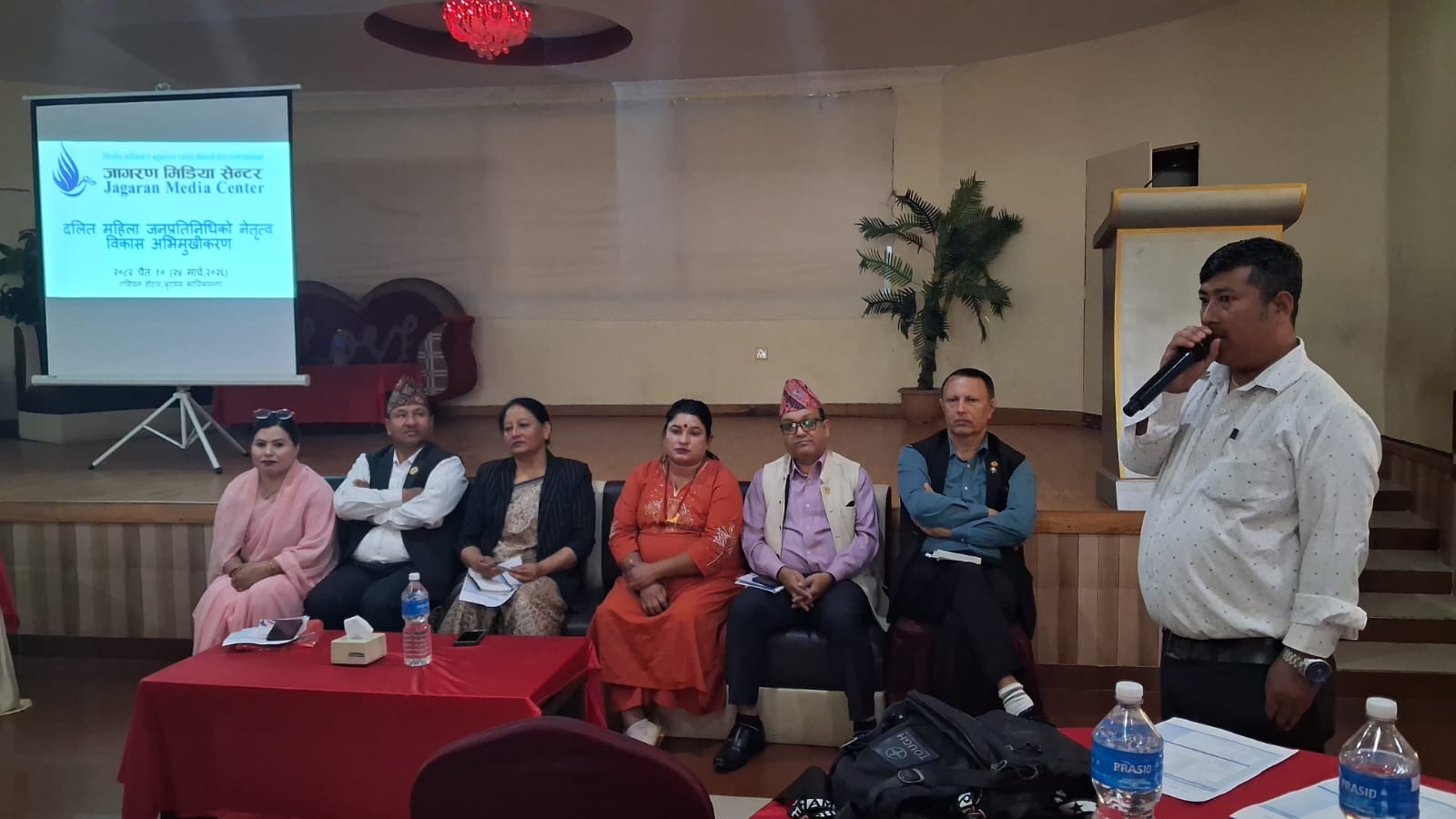
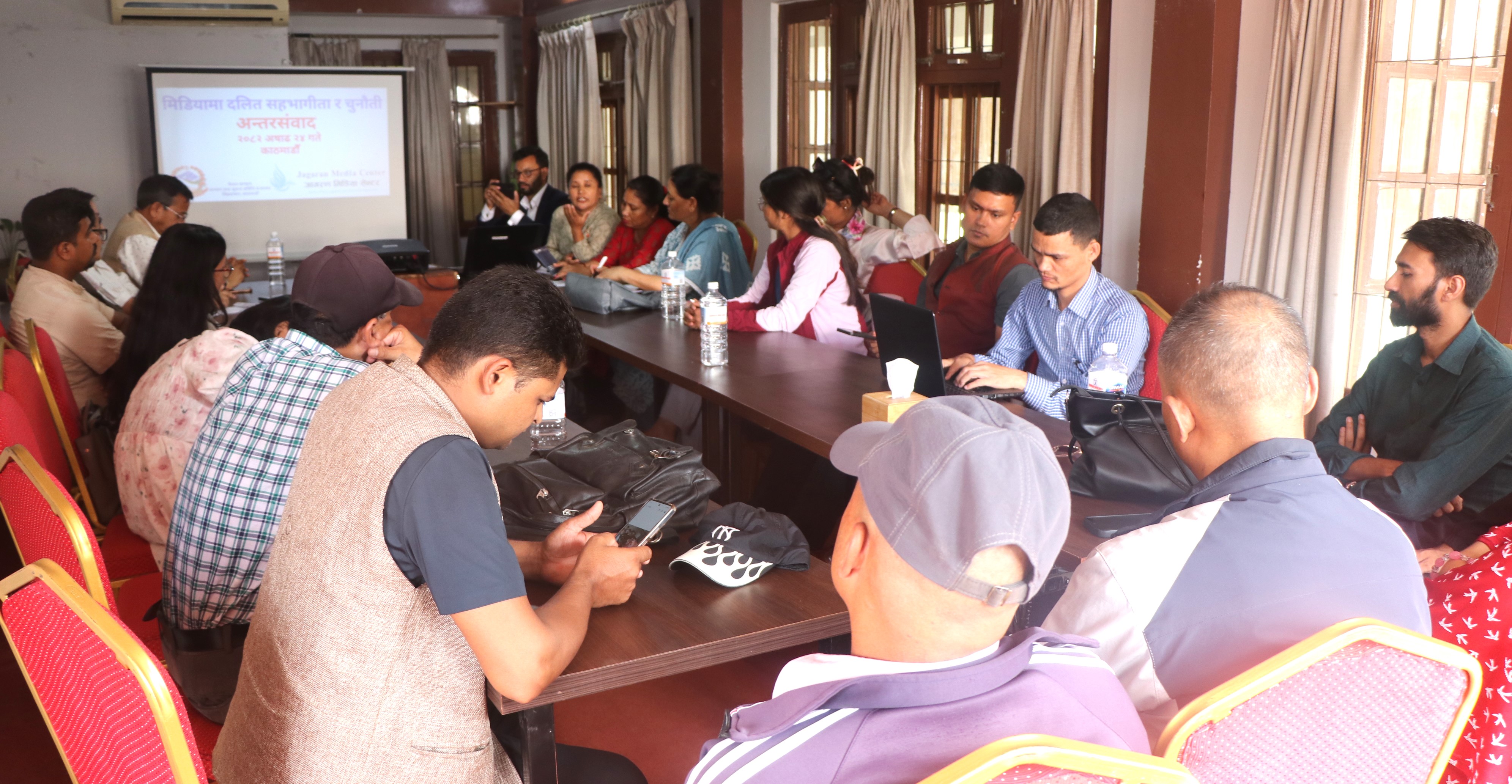
With a focus on media as a catalyst for social change, the Jagaran Media Center, in cooperation with the Ministry of Communications and Information Technology, organized a special interactive program titled "Dalit Participation and Challenges in Media" at Anamnagar, Kathmandu. This significant initiative aimed to highlight the critical issues surrounding representation, access, and equity of Dalits and other marginalized groups in Nepal’s media landscape.
1. Context and Background
The media plays a pivotal role in raising awareness on pressing social issues such as discrimination, inequality, poverty, violence, caste division, and child rights violations. Despite the evolving landscape of media—ranging from print to digital platforms—the core values of journalism remain rooted in truth, equity, and justice.
However, while the Constitution of Nepal enshrines social justice and proportional inclusion, Dalit communities continue to face marginalization in the socio-economic, educational, and media sectors. The media’s limited engagement with Dalit issues, both in presence and content, raises concerns regarding inclusivity in this powerful sector.
To address these gaps, this capacity-building initiative gathered 34 participants, including journalists from Dalit, Madhesi, Indigenous, and women’s communities; editors, policymakers, and rights activists.
2. Program Objectives
The event was centered on the following key goals:
3. Key Data Highlights
4. Voices of Experience: Notable Guests & Participants
Asha Bishwakarma, former State Minister and MP, emphasized that issues raised by Dalit MPs often fail to receive media coverage, while even minor interventions by non-Dalit MPs gain wide attention. She urged journalists to be proactive in highlighting marginalized voices in political discourse.
Parbati Bishwarkhe, former Member of Parliament, shared her efforts in formulating pressing parliamentary issues up to 45 times to ensure media attention. She encouraged journalists to act as a mirror of society, amplifying justice and equality.
Prakash Dhaulakoti, Central Secretary of the Federation of Nepal Journalists, criticized the mainstream media’s apathy toward Dalit and marginalized issues, stating that such negligence undermines the media’s democratic duty.
Rita Budhathoki, member of the Federation, reflected on her journey, underscoring the continued struggle within journalism to ensure inclusive representation.
Biru Nepali, General Secretary of Jagaran Media Center, stressed the need for a collective and unified movement among Dalit and marginalized journalists, advocating for structural change and conscious reporting on social injustice.
5. Challenges Identified
6. Real Stories, Real Struggles
Madhu Shahi, senior journalist at RSS, highlighted that editorial desks often overlook Dalit stories unless tied to specific occasions. She called for newsroom sensitization and editorial accountability.
Ajnavi Paudyal, from Annapurna Post, called on NGOs and civil organizations to provide factual support to help journalists cover marginalized issues.
Shyam, from Nepal Live TV, linked caste-based injustices to broader societal violence, pushing for narrative shifts in crime and caste reporting.
Keshav Bhule, of Nepal Press, challenged the media structure’s failure in inclusion, advocating for policy enforcement and Dalit leadership in institutions like the Nepal Press Council.
7. Inaugural Highlights & Organizational Commitment
Dinesh Kumar Pariyar, Vice President of Jagaran Media Center, welcomed attendees and urged solidarity across all journalists to collectively raise voices for justice.
Kamala Bishwakarma, Chairperson of Jagaran Media Center and former Constituent Assembly member, emphasized the organization’s long-standing work in media capacity-building, journalist training, and advocacy for inclusive narratives. She highlighted their efforts through radio programs, telefilms, and digital media platforms.
8. Chief Guest’s Perspective
Umid Bagchand, Vice President of the Federation of Nepali Journalists and former BBC Nepali Service journalist, stated that Dalit journalists must take the lead in bringing community concerns to the forefront. He emphasized that Dalit women and intersectional inclusion must become reporting priorities. He also underlined that the role of journalists in promoting human rights is not just professional—it is moral and democratic.
Conclusion and Way Forward
This impactful program echoed a single truth: media must be inclusive to be democratic. The insights, data, and voices shared during the event highlight the urgent need to strengthen Dalit representation, transform media practices, and promote justice-based journalism.
As Nepal envisions a more equitable society, the media must walk hand in hand with marginalized voices, ensuring not only presence but influence. Jagaran Media Center, along with partners like the Ministry of Communications, remains committed to this mission—empowering the unheard, transforming narratives, and reshaping the media landscape for the better.
📍Published by:
Jagaran Media Center, Kathmandu
📩 Contact: info@jagaranmedia.org.np
📞 Phone: +977-1-5172646
🌐 Website: https://www.jagaranmedia.org.np/
🗓 Date of Publication: 2082 Ashadh 24
✍️ Report Compiled by: JMC Editorial Desk
📢 Supported by: Ministry of Communications and Information Technology, Government of Nepal